


Utilization of produced water as an alternative in fracturing fluid formulation is gaining increasing attention in the oil and gas industry, particularly amid limited freshwater availability in the field. However, the complexity of the chemical composition of produced water, especially the presence of monovalent and divalent ions, can significantly affect the rheological properties of the fluid, including viscosity, which is a key parameter in the success of hydraulic fracturing. Therefore, a deeper understanding of ion–polymer interactions becomes crucial in designing fracturing fluid which is optimal and applicable.
This study reviews the results of recent research on the effects of barium and sulfate ions on hydroxypropyl guar (HPG)-based fracturing fluid , as well as their implications for the use of produced water in the field.
Utilization of Produced Water in Fracturing Fluid: Challenges and Opportunities
The use of produced water offers advantages in terms of availability and cost efficiency. However, its complex ionic composition can affect the stability and performance of fracturing fluid. Dissolved ions, both monovalent and divalent, are known to play a role in determining fluid viscosity and flow behavior, and therefore require further investigation.
Research Objective: Understanding the Role of Ions in Performance Fracturing Fluids
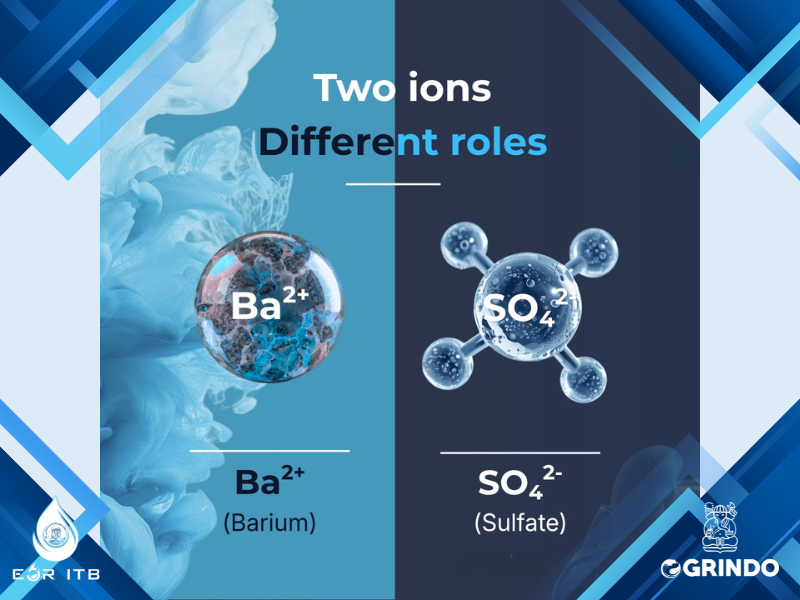
This study aims to evaluate the effect of divalent ions, particularly barium (Ba²⁺) and sulfate (SO₄²⁻), on the viscosity of HPG-based fracturing fluid . In addition, this study also aims to understand how these ions influence the rheological behavior of the fluid under various operating conditions.
Testing Methodology: Evaluation of HPG Fluid Rheology under Various Conditions
The testing was conducted experimentally using HPG solutions with varying concentrations of barium and sulfate ions. The main parameter observed was fluid viscosity under different shear rate and temperature conditions.
In general, the testing includes:
- The addition of BaCl₂ and Na₂SO₄ ions up to a concentration of 150 ppm
- Viscosity measurement using a rheometer at several shear rate
- Evaluation at 25°C (surface conditions) and 70°C (reservoir conditions)
- Analysis of polymer hydration time and fluid residue testing
This approach is used to represent actual field conditions.
Results and Discussion: The Impact of Barium and Sulfate Ions on Viscosity
The results show that the ionic content in produced water has different effects on the rheological properties of fracturing fluid:
Barium Ion (Ba²⁺)
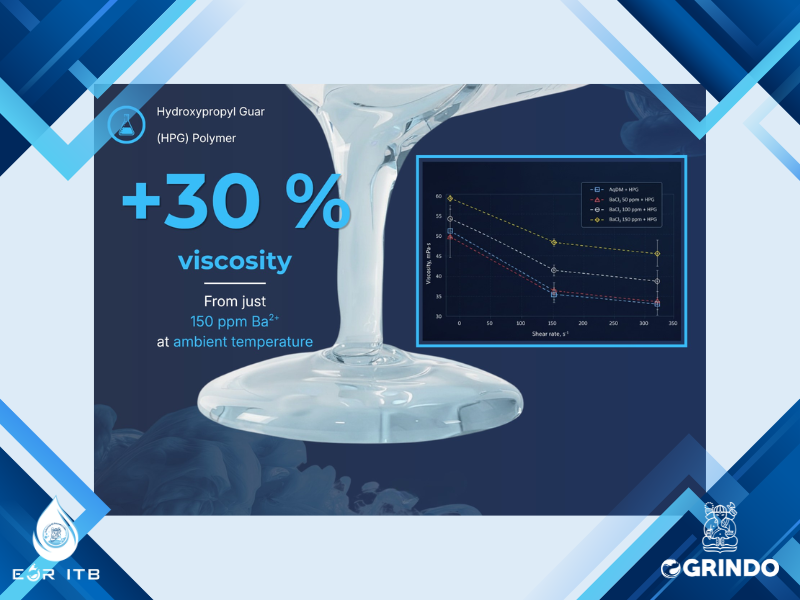
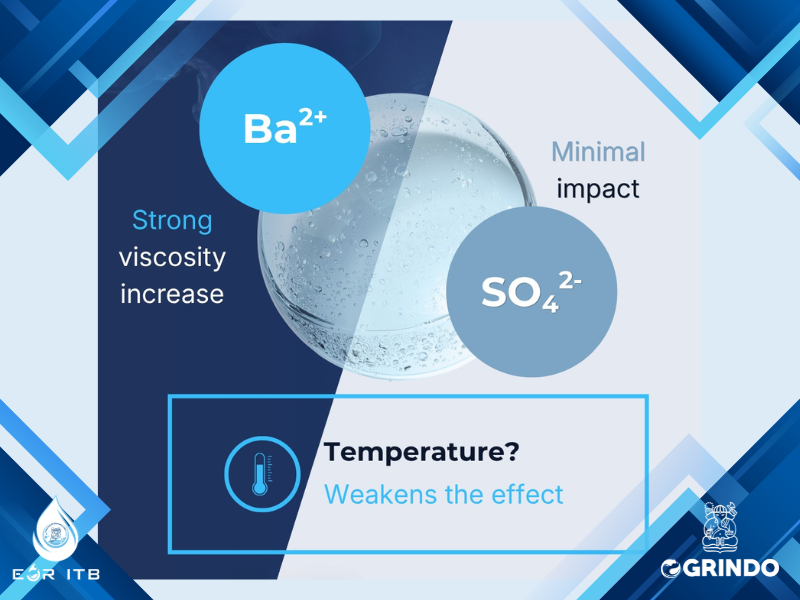
At a concentration of 150 ppm, barium can increase fluid viscosity by approximately 30% at 25°C. However, at 70°C, this effect becomes less significant.
Sulfate Ion (SO₄²⁻)
Sulfate shows a relatively small effect on viscosity, with an increase of around 7% at low temperature, and no significant effect at higher temperatures.
Fluid Rheological Behavior
The fluid exhibits shear thinningbehavior, where viscosity decreases as increasing shear rate.
Fluid Residue
The presence of barium and sulfate ions increases residue levels, but they remain within industry standard limits.
Conclusion: Implications for Fracturing Fluid Design in the Field
This study shows that barium ions have a more significant effect than sulfate ions in increasing the viscosity of HPG-based fracturing fluid , particularly at low temperatures. Meanwhile, the influence of both ions tends to decrease at higher temperatures.
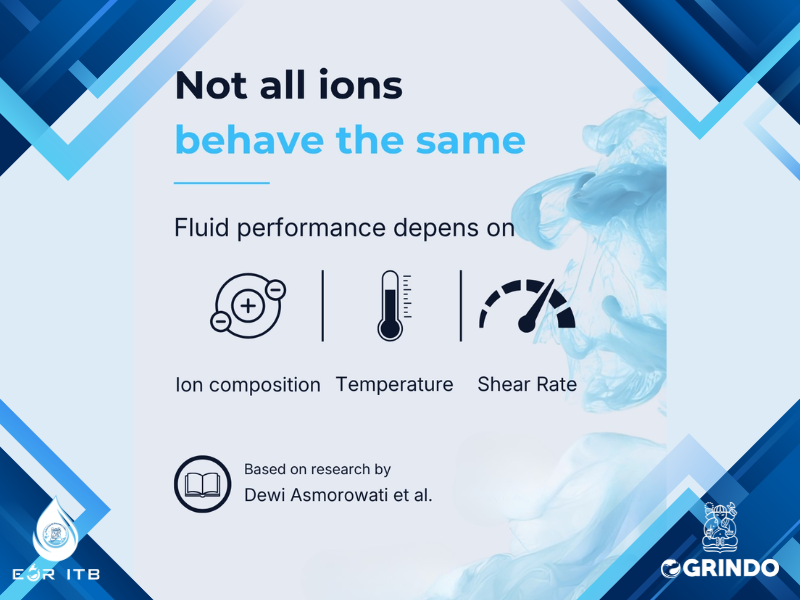
These findings highlight the importance of characterizing ionic composition in produced water as part of the fracturing fluiddesign process to ensure optimal performance under reservoir conditions.
Access to the Published Paper
To gain a deeper understanding of this study, you can access the full publication through the following link: 👉 click here.
Research and Industry Collaboration
OGRINDO ITB and the EOR Laboratory ITB remain committed to supporting the development of Enhanced Oil Recovery technologies based on research and industry needs. If you are interested in discussion or exploring collaboration opportunities, please contact us through:
📩 info@ogrindoitb.com
📩 eor@itb.ac.id