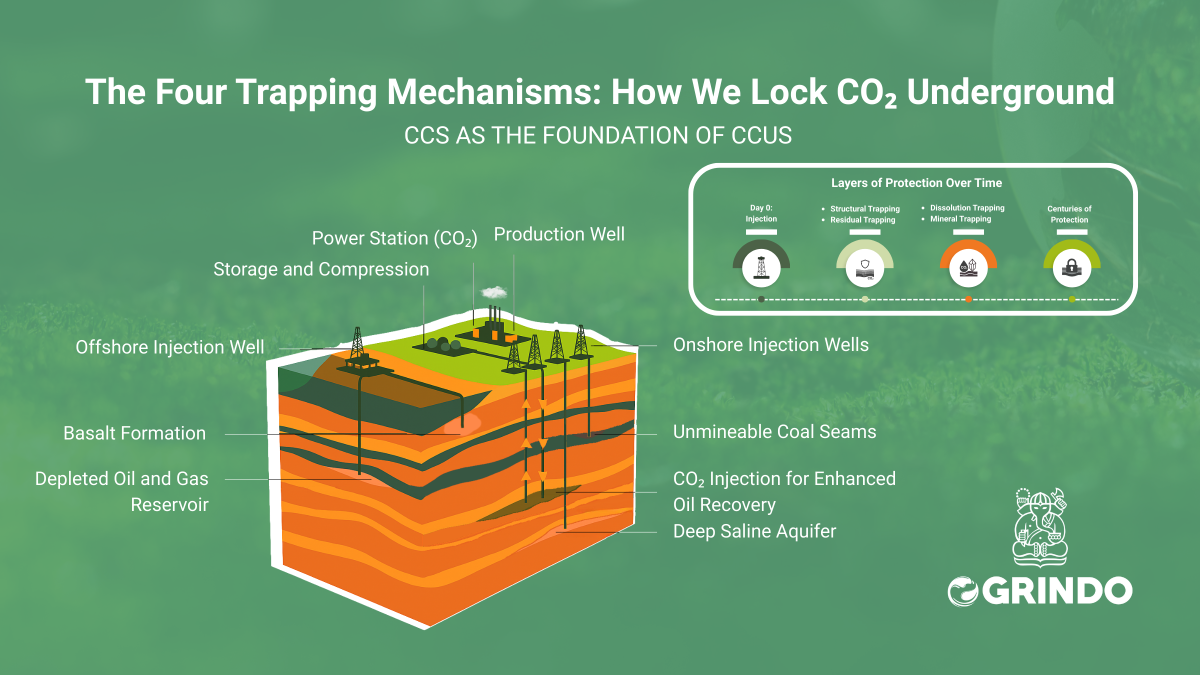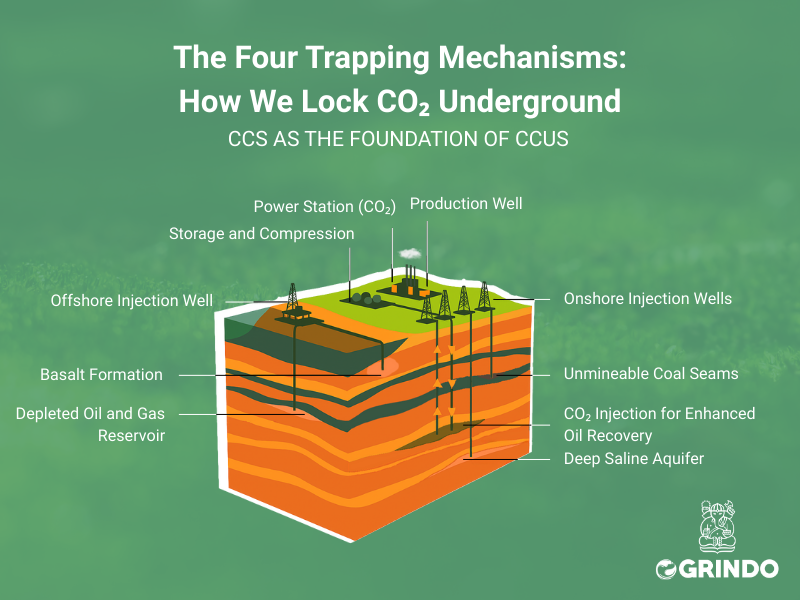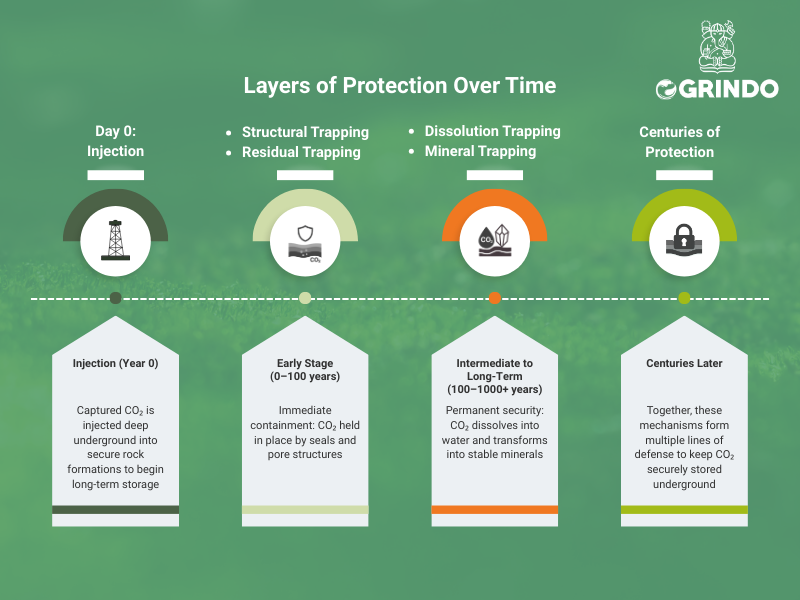
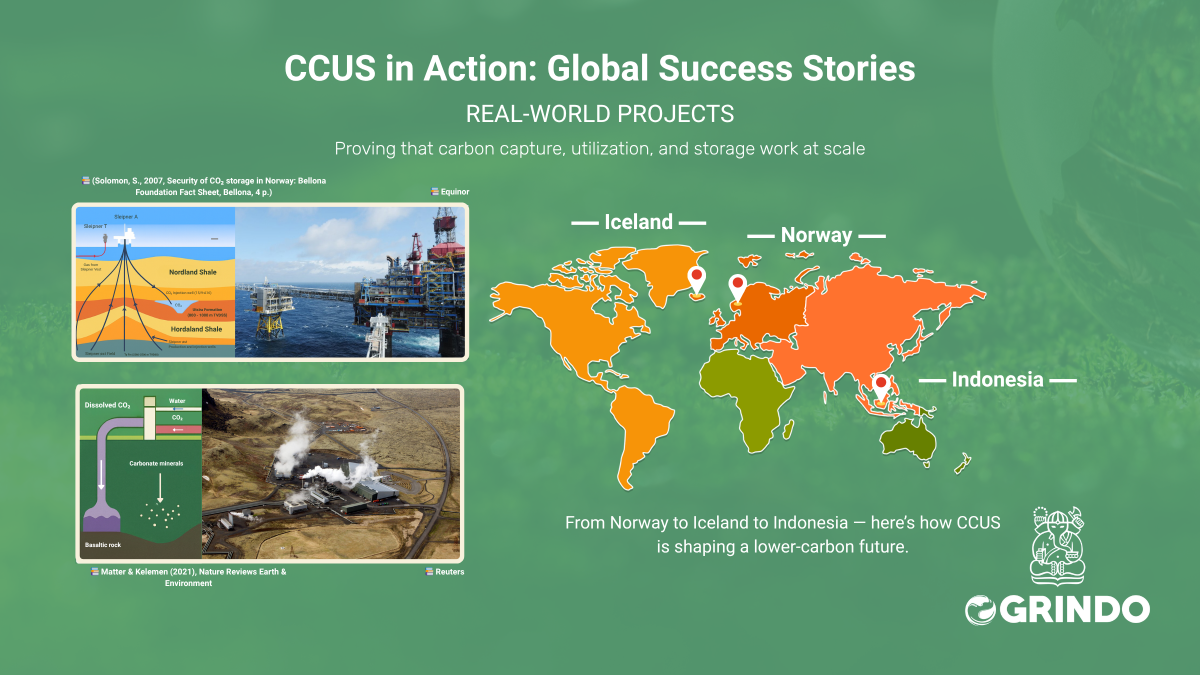
In facing the challenge of climate change, Carbon Capture, Utilization, and Storage (CCUS) technology has become one of the proven, real-world solutions globally. From offshore CO₂ storage to natural mineralization into rock, flagship projects in Norway and Iceland have demonstrated that carbon emissions can not only be controlled but also utilized to create new economic value. With a scientifically verified track record of implementation, CCUS has now become a vital pillar in the transition toward a cleaner and more sustainable energy future.
Toward a Low-Carbon Future Through the Implementation of Scientifically Verified CCUS Technology
Amid the urgency of the global energy transition, Carbon Capture, Utilization, and Storage (CCUS) technology has become one of the main pillars in efforts to reduce carbon emissions. Through implementation in various countries, CCUS has proven effective not only in reducing greenhouse gas emissions but also in enhancing economic efficiency and energy industry sustainability.
The following two global success stories show that low-carbon solutions are not merely concepts — they are already a reality.
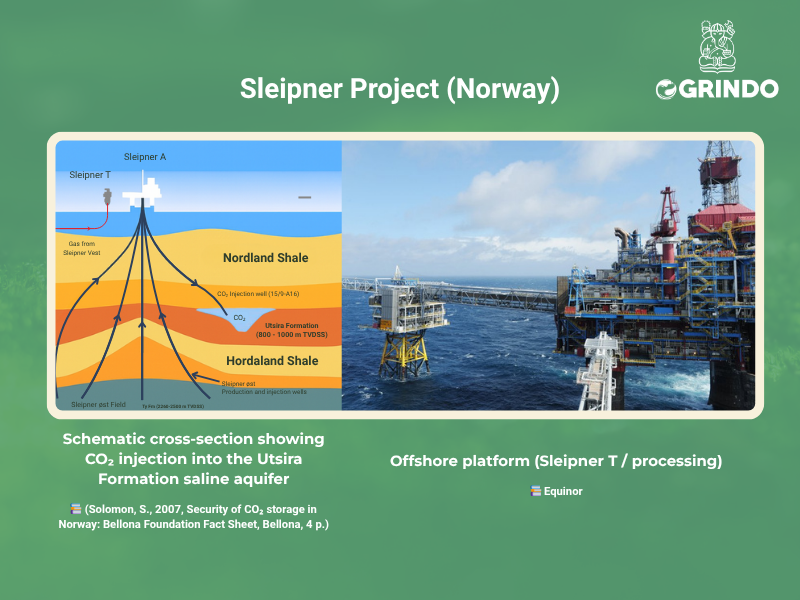
Sleipner (Norway): A Pioneer in Offshore CO₂ Storage
Launched in 1996 by Equinor (formerly Statoil), the Sleipner Project is located in Sleipner West gas field, approximately 250 km southwest of Stavanger, Norway, in the Central North Sea. This project is the world’s first commercial CCS project, injecting CO₂ separated from natural gas into the Utsira Formation situated about 800–1000 meters below sea level. To date, more than 16 million tons of CO₂ have been safely stored in the Utsira Formation. The success of Sleipner is supported by rigorous 3D seismic and gravimetric monitoring systems, ensuring no CO₂ leakage from the storage layer. With efficient storage costs, the project proves that CCS can operate safely and economically while complying with Europe’s strict environmental regulations.
CarbFix (Iceland): Turning CO₂ into Stone
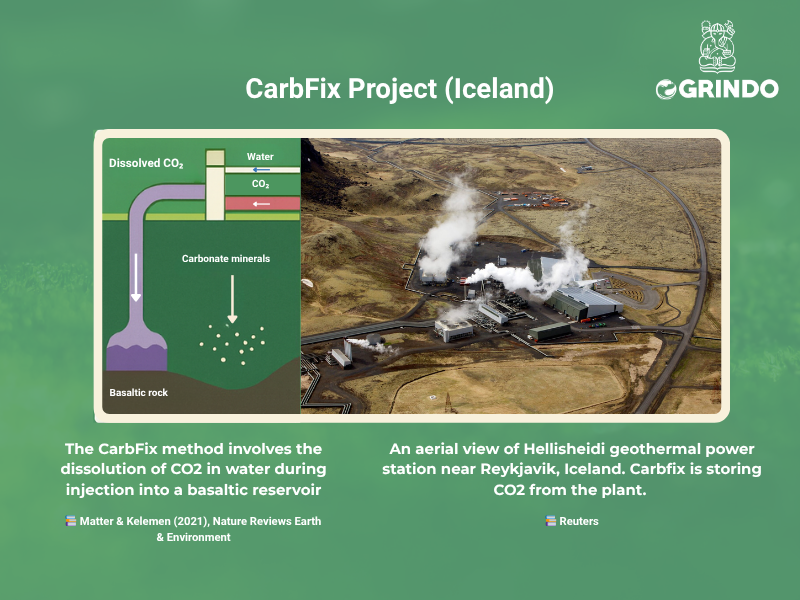
Beneath Iceland’s basaltic subsurface, the CarbFix Project transforms the concept of CCS into something more permanent — natural mineralization. By dissolving CO₂ into water and injecting it into reactive basalt rocks, more than 95% of the CO₂ is converted into carbonate minerals.
The advantage of this method lies in long-term storage security: carbon is converted into solid minerals, eliminating the risk of leakage. To date, CarbFix has stored more than 100,000 tons of CO₂ beneath Iceland. The rapid mineralization method developed by the project is now being adapted in various countries — including Norway, the United States, and India — through research initiatives applying similar principles to permanently store carbon in basaltic rocks.
What Indonesia Can Learn
Indonesia has a carbon storage potential of approximately 400 gigatons of CO₂ across various geological formations — including oil and gas reservoirs, deep sandstones, and saline aquifer distributed in Sumatra, Kalimantan, and Java. This potential places Indonesia among the countries with the largest carbon storage capacity in Southeast Asia.
However, experiences from Sleipner (Norway) and CarbFix (Iceland) show that the sustainability of Carbon Capture, Utilization, and Storage (CCUS) implementation depends not only on technology but also on a robust supporting ecosystem: regulation, collaboration, and public trust.
1️⃣ Strong and Adaptive Regulatory Framework
An important step has begun with Presidential Regulation No. 14 of 2024 concerning the Implementation of Carbon Capture and Storage (CCS) Activities, which serves as Indonesia’s first national legal framework comprehensively regulating CCS implementation. This regulation defines key terms, licensing mechanisms, and business and technical schemes for CCS. It provides clarity on CO₂ storage rights, responsibilities, and post-closure monitoring mechanisms.
In addition, the Ministry of Energy and Mineral Resources (ESDM) has issued a Technical Guideline for CCS/CCUS Implementation, serving as a reference for industries and research institutions in conducting feasibility studies, injection design, and field monitoring.
2️⃣ Cross-Sector Collaboration
In line with global practices, the successful implementation of CCS/CCUS in Indonesia requires synergy among the government, the energy industry, academia, and research institutions. This is where the role of the Bandung Institute of Technology (ITB) and OGRINDO ITB becomes crucial — bridging laboratory research, reservoir modeling, and field testing with industry needs.
Collaboration with national oil and gas companies such as Pertamina Subholding Upstream and international partners also opens vast opportunities for CCS/CCUS pilot project , particularly in mature oil fields.
3️⃣ Scientific Monitoring and Data Transparency
From the experiences of Sleipner and CarbFix, it has been proven that science-based monitoring and data transparency are key factors in maintaining public trust and long-term project sustainability. Sleipner, for instance, has conducted 4D seismic monitoring and gravimetric surveys for over 20 years to ensure CO₂ storage safety, while CarbFix makes its research data publicly available to promote innovation and global collaboration.
A similar approach can be applied in Indonesia — by establishing open monitoring and reporting systems accessible to government, academia, and the public, thereby strengthening trust in CCUS implementation.
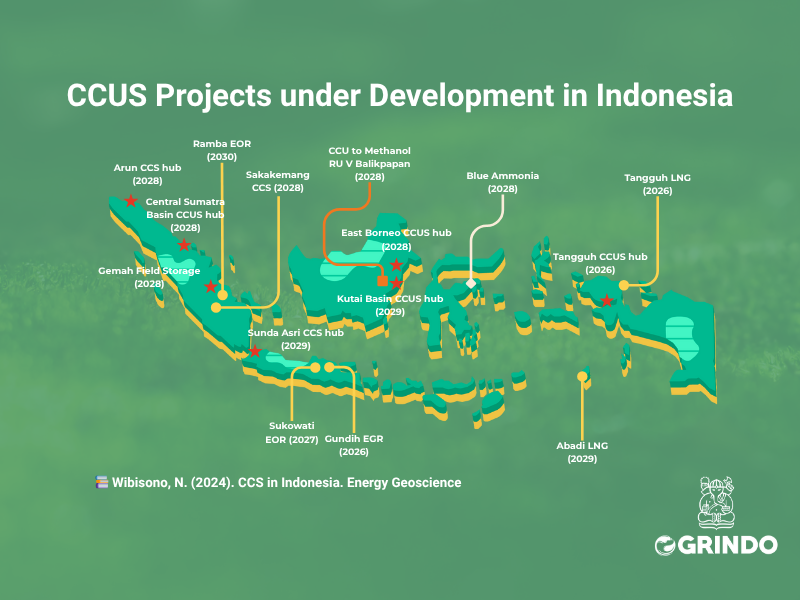
Through this integrated approach, Indonesia has a great opportunity to replicate global success and realize its first commercial CCS/CCUS project by 2026, as outlined in the National Energy Transition Roadmap. Currently, several national energy companies have initiated CCS/CCUS feasibility studies at multiple oil and gas fields, including the Gundih Field (Central Java) and the Tangguh Field (West Papua), both targeted as pilot projects before 2026. These early implementations will lay the foundation for a long-term carbon storage ecosystem in Indonesia. The success of these pilot projects will mark a crucial milestone in achieving the Net Zero Emission 2060 target. Net Zero Emission 2060.
🌱 From Research to Action
CCUS technology is not merely a future solution — it is a strategic investment to ensure national energy sustainability and industrial competitiveness in the green transition era. Through collaborative research, technological innovation, and knowledge transfer, OGRINDO ITB is committed to supporting the development of CCS/CCUS from laboratory stages to field-scale implementation.
With clear policies, multi-sector collaboration, and strong scientific foundations, Indonesia is ready to move from research to real-world implementation — turning carbon from a burden into an opportunity to build a clean, globally competitive energy future.
📩 Interested in collaborating on CCS/CCUS research?
📩 Contact us: info@ogrindoitb.com
Let’s accelerate the journey toward Net Zero Emission 2060 and build a resilient, clean, and globally competitive Indonesian energy future.
📚 References
- Furre, A.-K., Eiken, O., Alnes, H., Vevatne, J. N., & Kiær, A. F. (2017). 20 years of monitoring CO₂-injection at Sleipner. Energy Procedia, 114, 3916–3926.
- Snæbjörnsdóttir, S. Ó. et al. (2020). Carbon dioxide storage through mineral carbonation. Nature Reviews Earth & Environment, 1, 90–102.
- Ramadhan, R. et al. (2024). Carbon capture, utilization, and storage in Indonesia. Energy Geoscience, 5, 100335.
- CarbFix Official Website