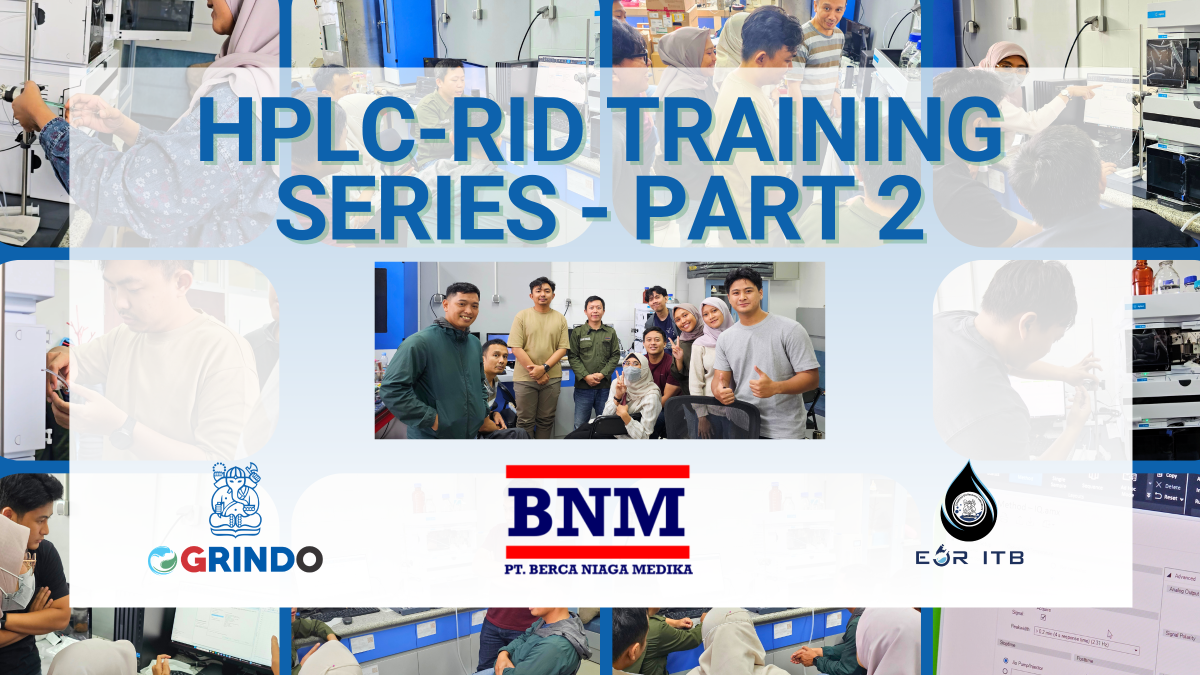
Analysis using High Performance Liquid Chromatography (HPLC) with Refractive Index Detector (RID) is one of the important methods in the characterization of chemical EOR such as surfactants and polymers, particularly to support research needs and application of Enhanced Oil Recovery (EOR). Mastery of this method requires not only theoretical understanding but also the ability to operate the instrument and interpret data accurately. Therefore, OGRINDO ITB together with the EOR Laboratory ITB conducted Training HPLC–RID Part 2, which focuses on hands-on practice and comprehensive system operation, including method setup, system operation, and troubleshooting during testing.
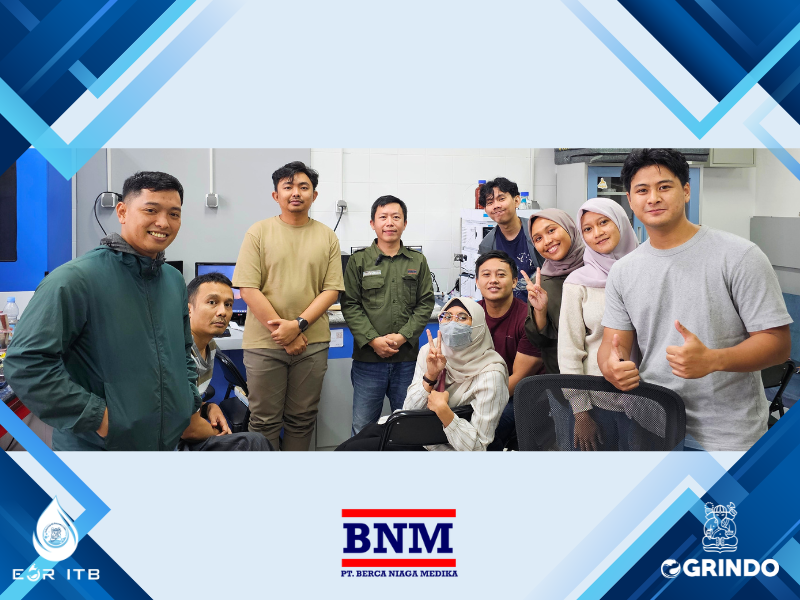
Hands-on Operation and System Setup of HPLC–RID
Mastery of the instrument does not stop at understanding theory—but at the ability to operate the system directly and interpret its response in real-time.
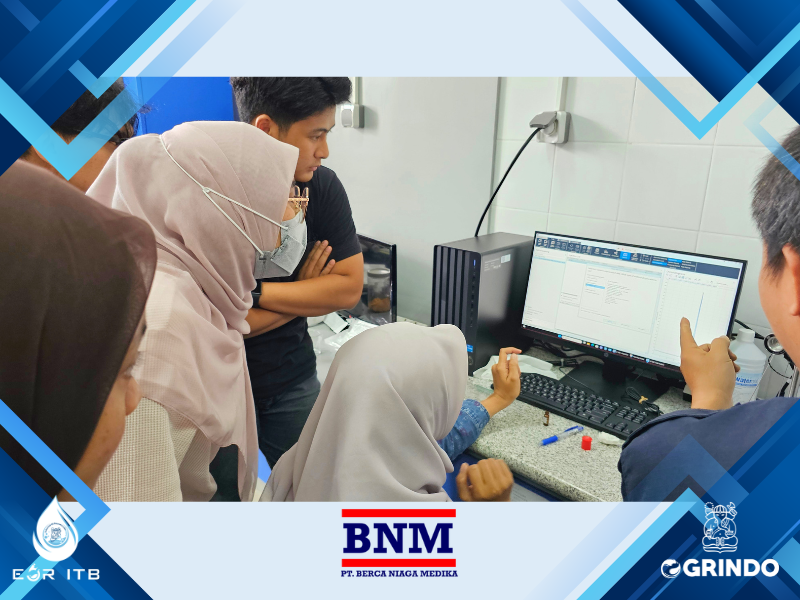
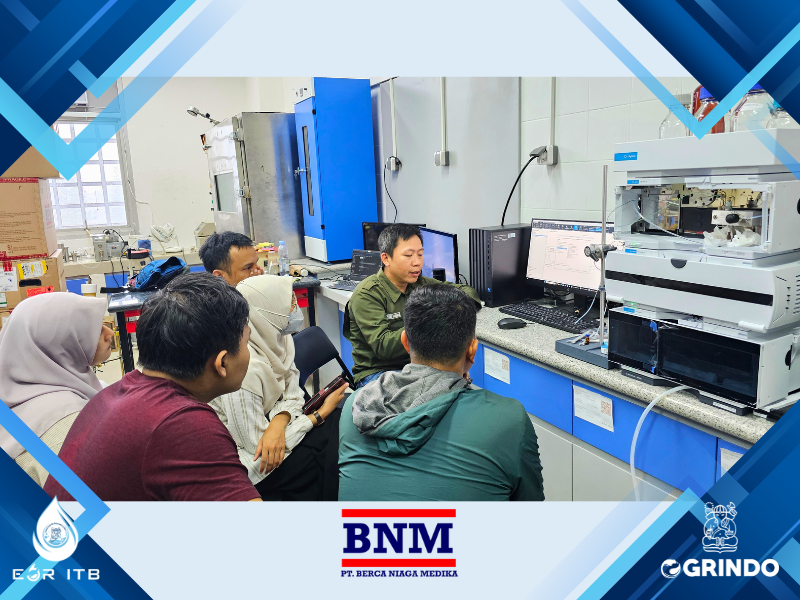
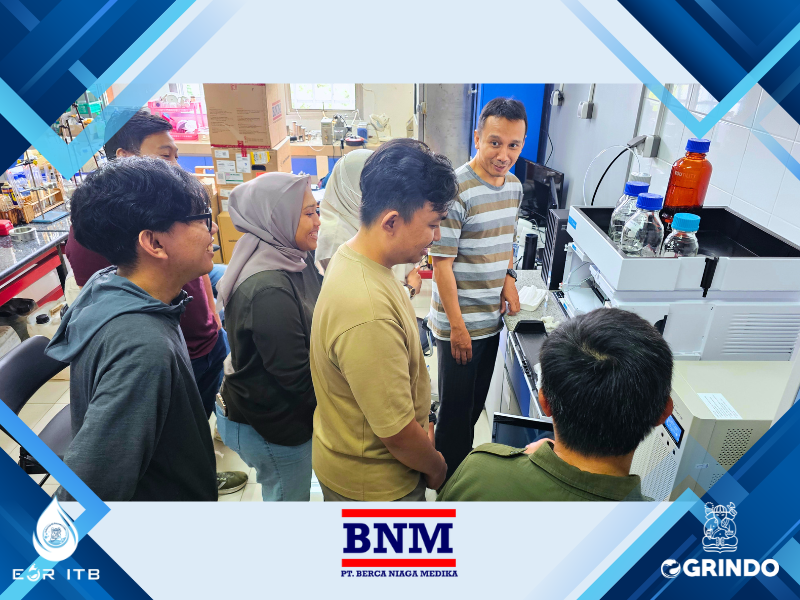
In this session, the training focused on hands-on operation of the HPLC–RID system comprehensively. Participants started from the initial stage of instrument operation to the analysis running process, emphasizing systematic and safe working procedures.
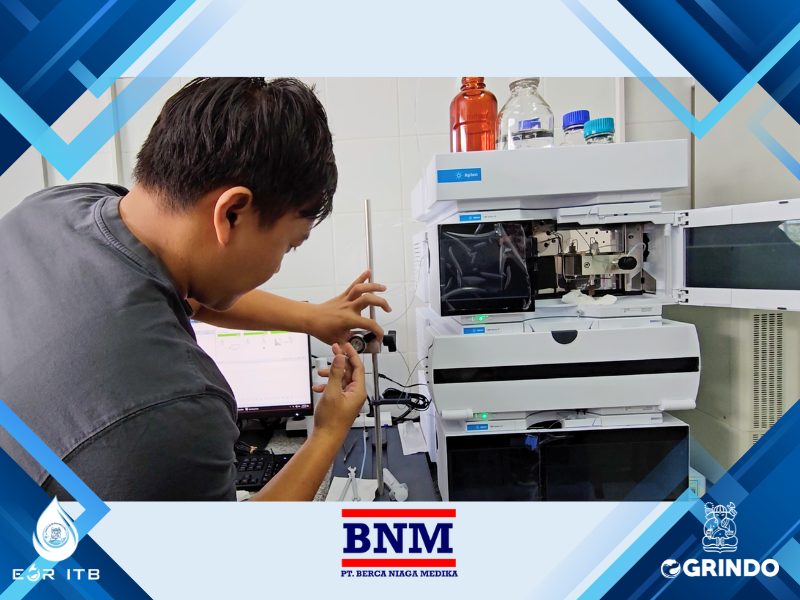
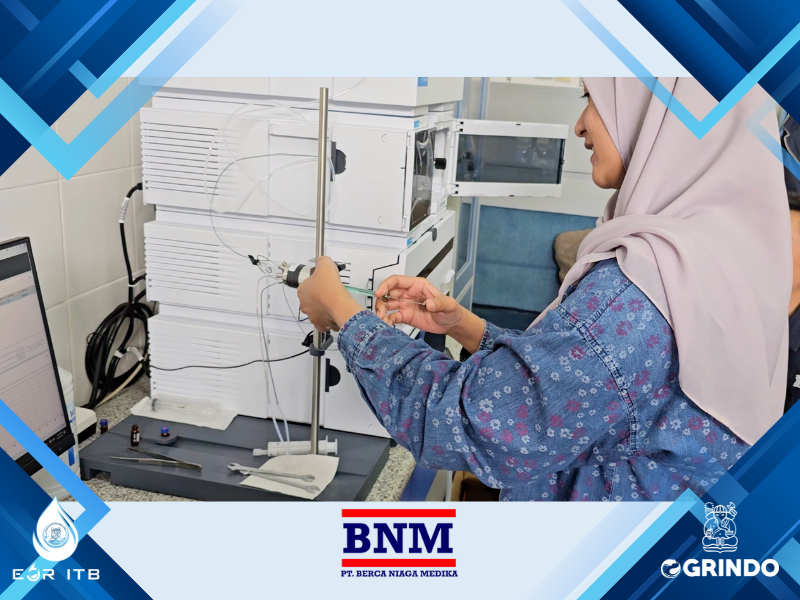
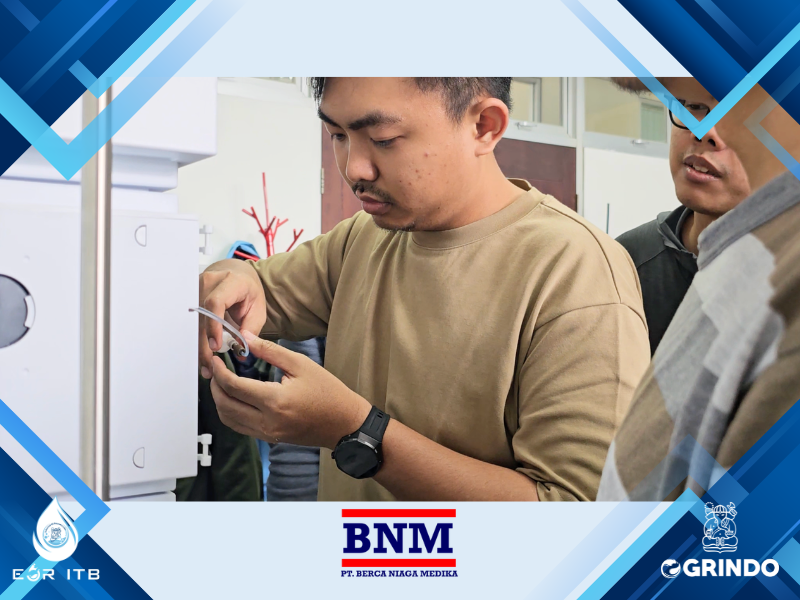
The activities began with:
- Procedures for turning on the instrument according to the operational sequence
- Ensuring the system is in a ready condition
- Recognizing indicators on the software and instrument as signs that the system has started running
Next, participants performed:
- Checking system readiness before analysis
- Setting up methods in the software, both for acquisition and data processing
- Adjusting important parameters such as baseline, retention time, and peak integration
During this process, participants also directly observed the system response to each parameter setting. This is important to understand how parameter changes can affect the resulting chromatogram.
In addition, the training also emphasized conditions that commonly occur during testing, such as unstable baseline yang tidak stabil, noise , or poorly detected peaks. Participants were guided to recognize these symptoms and understand initial handling steps so that the analysis process can continue properly.
This hands-on approach is key to building participants’ confidence in independently operating the HPLC–RID system in a laboratory environment.
Hands-on Polymer Sample Analysis
After understanding system operation and method setup, participants then directly applied this knowledge through polymer sample testing to evaluate system performance.
As the main part of the training, polymer samples were tested with several concentration variations to evaluate the RID detector response and the consistency of the analytical method used.
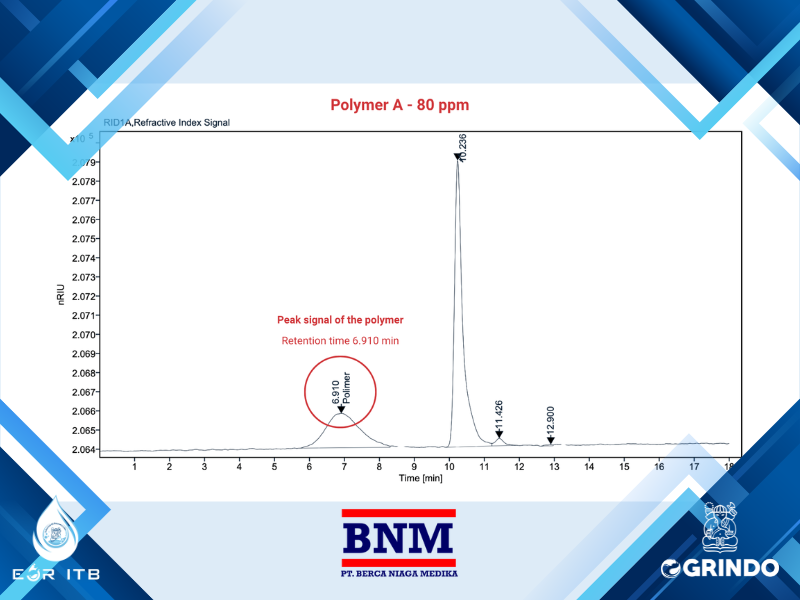
The chromatogram results show that the polymer peak is consistently detected at a retention time of approximately 6.6 – 6.9 minutes, indicating stable system conditions during the analysis.
In addition, an increasing trend in peak area is observed with increasing sample concentration, indicating that the detector response is proportional to the amount of sample tested.
Summary of Polymer Test Results
60 ppm | RT: 6,898 menit | Area: 9.950
80 ppm | RT: 6,910 menit | Area: 12.414
100 ppm | RT: 6,677 menit | Area: 15.431
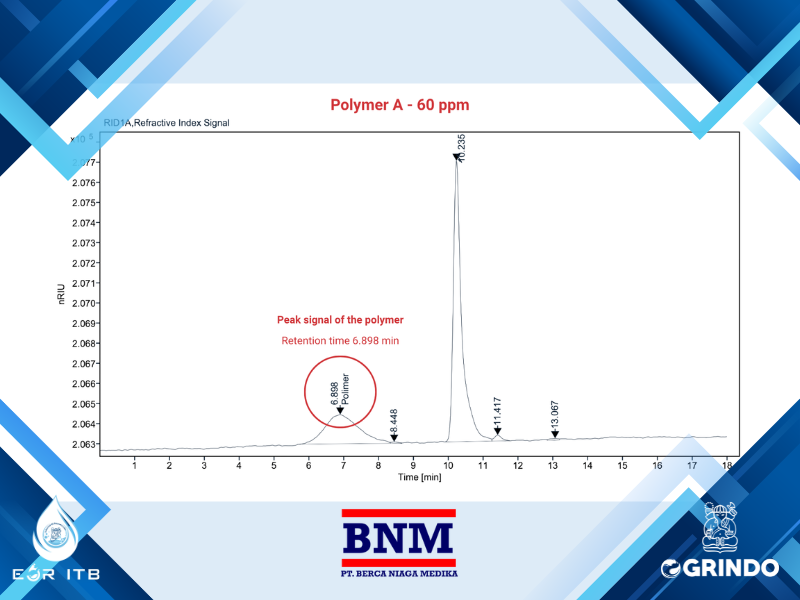
Brief Analysis of Test Results
The test results show that the method used has provided consistent and reliable responses. The relatively stable retention time at each concentration variation indicates that the system conditions were well maintained during the analysis.
On the other hand, the increase in area values in line with concentration indicates that the RID detector is capable of providing a proportional response to the amount of polymer analyzed. This indicates that the method has good potential for use in quantitative analysis.
However, at this stage, a calibration curve has not yet been applied, so the results obtained are still indicative and have not been used for absolute quantification.
Enhancement of Laboratory Analytical Competence
Through this hands-on session, participants gained practical experience in conducting HPLC–RID analysis comprehensively, from system operation to interpretation of test results. Participants also learned to understand the relationship between method parameters, instrument conditions, and the quality of the resulting chromatogram.
This approach not only improves technical skills but also builds analytical capabilities required in research and laboratory testing activities.
Conclusion
Training HPLC–RID Part 2 provides a comprehensive understanding of system operation and polymer sample analysis through hands-on practice. With a combination of instrument mastery, method understanding, and data interpretation, this training is expected to improve analysis quality and human resource readiness in supporting industrial and research needs, particularly in the EOR field.
Interested in Collaborating?
OGRINDO ITB and the EOR Laboratory ITB open opportunities for collaboration in the form of training, research, and laboratory analysis services that can be tailored to the needs of industry and academia.
For more information, please contact:
📧 OGRINDO ITB: info@ogrindoitb.com
📧 Laboratorium EOR ITB: eor@itb.ac.id
Enhance your analytical capabilities with us through research-driven training and best-practice collaboration.