Categories
News Article

From Laboratory Research to Field Success: Surfactant Flooding in Tanjung Field

Surfactant flooding is one of the Enhanced Oil Recovery EOR) methods that can be used to improve oil recovery through the injection of surfactants into the reservoir. Its application requires a formulation that is suitable for the characteristics of the oil and formation water, as well as evaluation through laboratory testing before being implemented in the field.

A study published in Scientific Reports discusses the implementation of surfactant flooding small-scale in a waxy oil reservoir in Tanjung Field, Indonesia. The study connects the formulation and evaluation of surfactants in the laboratory with coreflood testing and field implementation in Zone A, which has remaining oil significant.
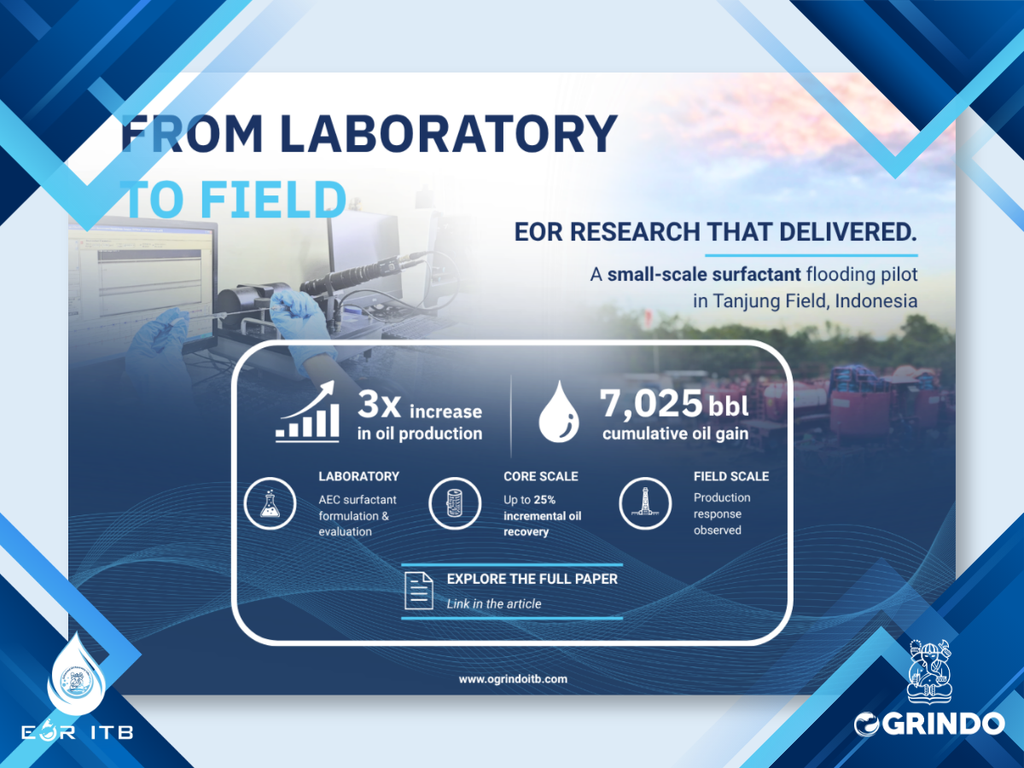
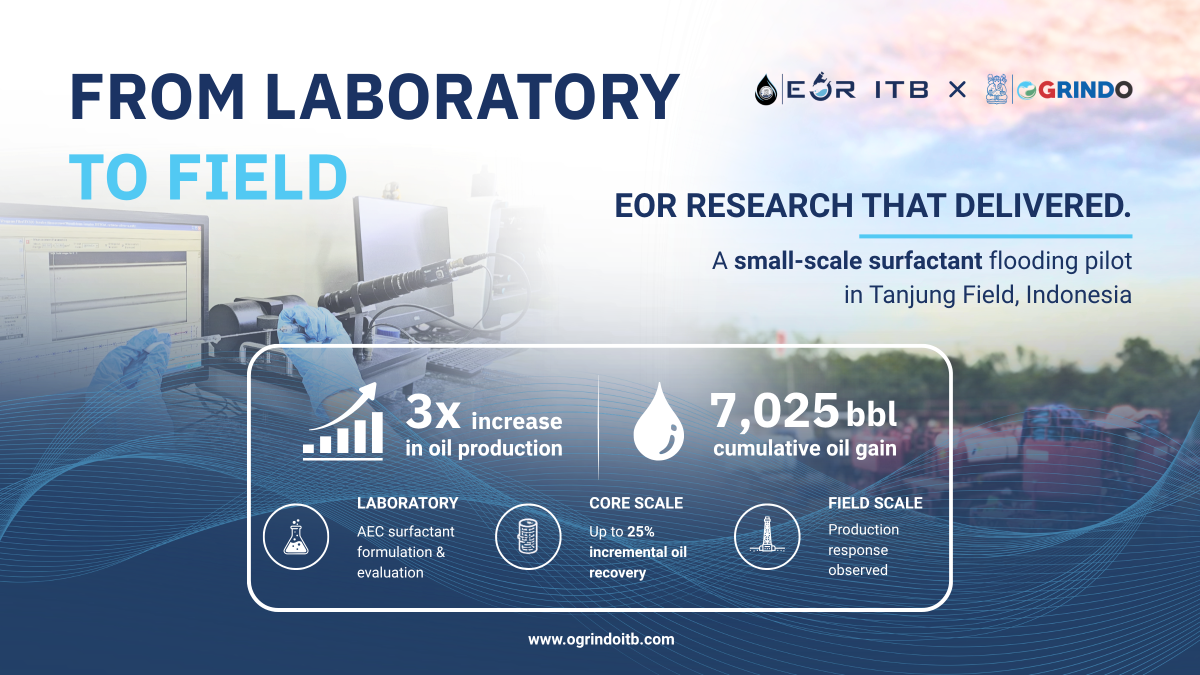
Figure 1. The surfactant flooding study in Tanjung Field achieved a threefold increase in oil production and a cumulative oil gain of 7,025 bbl.

Formulation and Laboratory Testing

This study used an Alkyl Ethoxy Carboxylate surfactant that was formulated and optimized based on the characteristics of the oil and formation water from Tanjung Field.

The optimization resulted in an interfacial tension (IFT) of 0.042 mN/m, compared to the initial oil-brine IFT of 18.3 mN/m. The formulation also demonstrated IFT stability during a thermal stability test at a temperature of 63 °C for three months.

The evaluation was then continued through coreflood testing using sample native core. Injection of a surfactant slug of 0.2 pore volume (PV) at a surfactant concentration of 2.0 wt.% resulted in a 25% increase in oil recovery.

Implementation of Surfactant Flooding Design in the Field

For the field test, an injector-producer pair was selected based on good connectivity and close proximity. This selection was made to achieve a faster response while maintaining testing cost efficiency.

The surfactant was continuously injected for four days, beginning on January 19, 2016, followed by water injection. Production was monitored until March 2017, targeting an effective reservoir pore volume of 10,625 bbl.

Results and Research Collaboration

Implementation of surfactant flooding resulted in a threefold increase in oil production rate and a cumulative oil gain of 7,025 bbl. The total testing cost was recorded at USD 61,812, including chemical and operational costs.

This study involved Lab EOR ITB through the authors' research affiliations. OGRINDO ITB was also acknowledged in the publication for its support through access to experimental equipment and facilities that supported the research.

The results of this study demonstrate how laboratory evaluation and field testing can form part of the implementation of surfactant flooding to support improved oil recovery in the Tanjung Field case study.

Scientific Publication

This study was published in Scientific Reports under the title:
“Surfactant flooding in waxy oil reservoir in Tanjung field, Indonesia: a case study of successful small-scaled field implementation.”

Read the full publication here.

Interested in EOR Research and Testing?

OGRINDO ITB and Lab EOR ITB are open to research development, laboratory testing, and collaboration in the field of Enhanced Oil Recovery and related oil recovery technologies.

Contact us:
📩 OGRINDO ITB
info@ogrindoitb.com
📩 Lab EOR ITB
eor@itb.ac.id
Categories
News Article

Optimization of Enhanced Oil Recovery Using Low Salinity Water and TiO₂ Nanofluid in Sandstone Reservoirs

The application of Enhanced Oil Recovery (EOR) technology continues to be a strategic focus in efforts to increase national oil production, especially in reservoirs that have entered the late stage of their productive life. One EOR method that is currently gaining attention is the use of Low Salinity Water (LSW) as an injection fluid. Several studies have shown that low-salinity brine is able to mobilize residual oil more effectively compared to brine with high salinity.

Recent research indicates that the effectiveness of LSW can be further enhanced through the addition of titanium dioxide (TiO₂) nanoparticles. This study becomes important because experimental data regarding the compatibility and synergistic mechanisms of both in the crude oil–brine–rock (COBR) system are still limited.

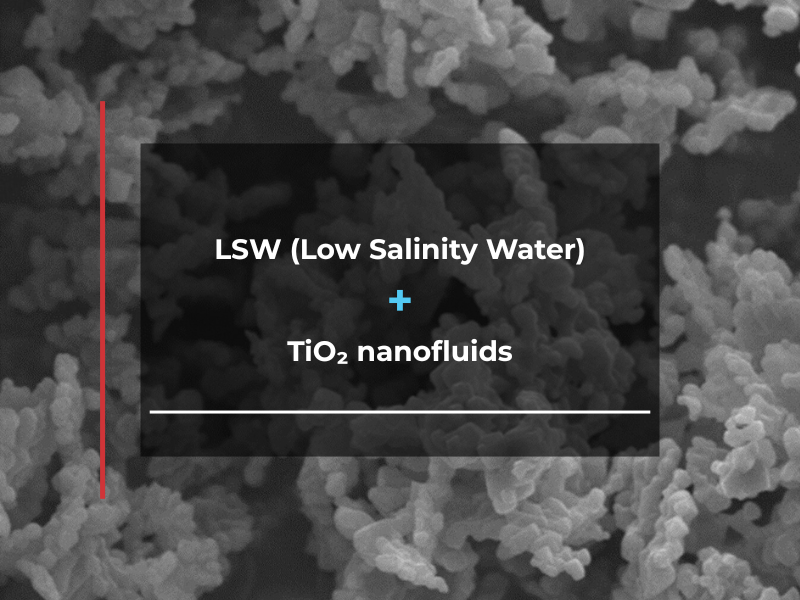
Figure 1. Illustration of crude oil–brine–rock (COBR) interaction in the LSW–TiO₂ study.

Why Does Low Salinity Water Become More Effective with TiO₂ Nanoparticle?

Recent laboratory studies investigated crude oil–brine–rock (COBR) interactions within a salinity range of 500–32,000 ppm and TiO₂ concentrations of 0–100 ppm using sample from Berea sandstone. The results show that the addition of TiO₂ into LSW induces significant physicochemical changes, particularly in pH, zeta potential, and contact angle parameters, which directly influence the mechanism of oil detachment from the rock surface.

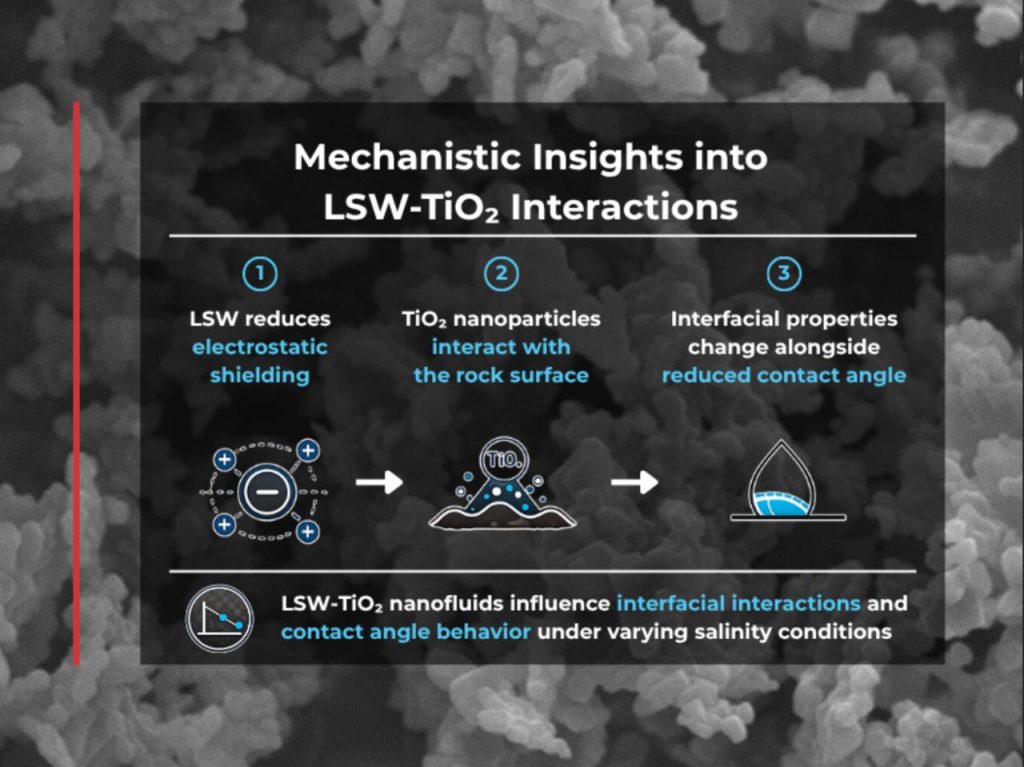
Figure 2. Mechanistic insight into LSW–TiO₂ interactions affecting interfacial properties and wettability, contributing to enhanced the performance of oil recovery oil recovery.

This combination produces an effective LSW–TiO₂ nanofluid capable of altering the rock wettability toward a more water-wet (wettability alteration). In water-wetconditions, the rock surface is more easily wetted by water, allowing oil that was previously strongly attached to the pore surfaces to move and be produced more efficiently.

Figure 2. Changes in zeta potential (ZP) values at various TiO₂ concentrations and salinity levels.

Implications for EOR

Findings from this study show that the combination of LSW and TiO₂ nanoparticles has significant potential for optimizing the EOR process in sandstonereservoirs. Modifications of interfacial properties—particularly through changes in wettability—emerge as the main mechanism supporting enhanced oil mobilization.

This study also demonstrates that the tested TiO₂ concentrations provide consistent physicochemical responses, opening opportunities for designing more optimal injection fluids to maximize oil recovery.

In addition to offering a fundamental understanding of fluid–rock interactions under low-salinity conditions, the results of this research provide new direction for developing more effective LSW–TiO₂ nanofluid formulations for field applications. Further studies, such as coreflooding,, are planned as the next step to validate the implications of these findings on direct oil recovery improvement.

🔗 Access to the Published Paper

Interested in understanding the mechanisms, experimental data, and complete analysis in greater detail?
The paper can be accessed here.

🤝 Research and Industry Collaboration

OGRINDO ITB welcomes collaboration opportunities for further research and industrial partnerships in the fields of EOR, nanotechnology, and reservoir chemistry.
Contact us at: 📩 info@ogrindoitb.com