

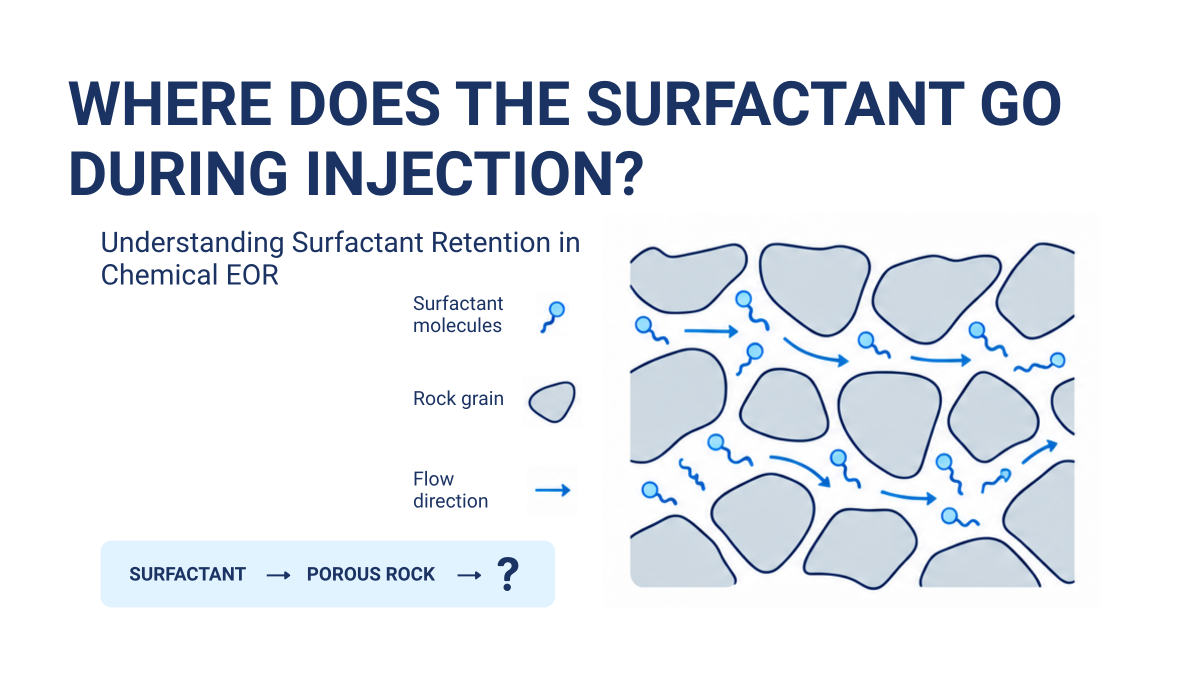
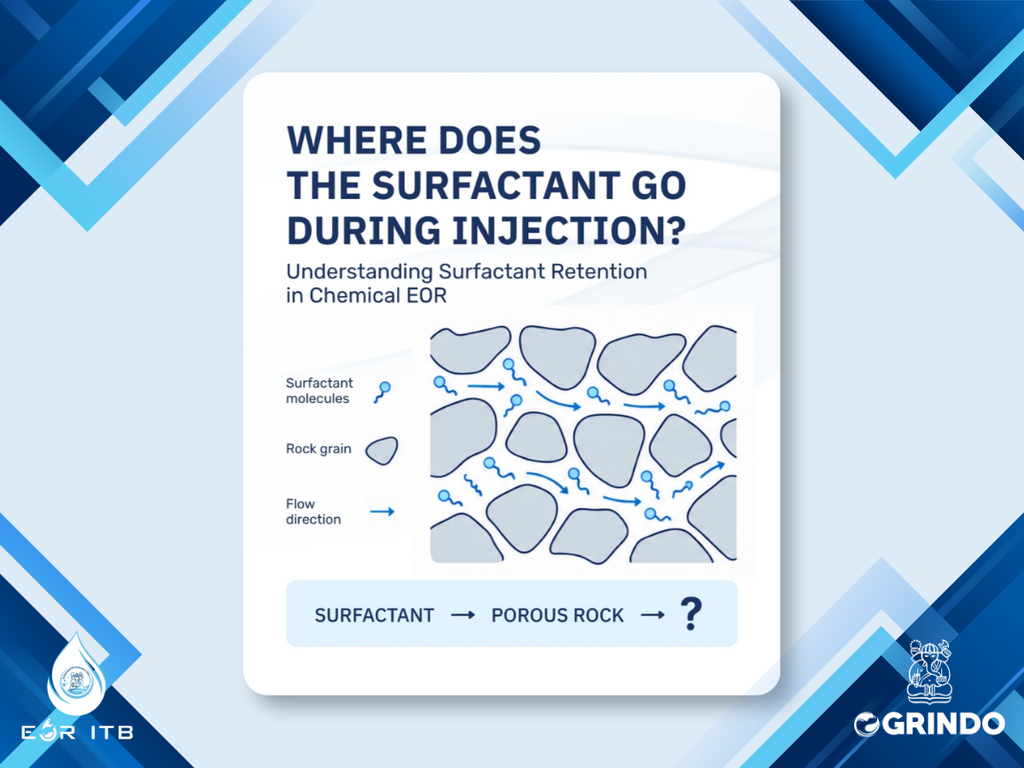
In surfactant flooding, surfactants are injected into the reservoir to help increase oil recovery, one of which is by reducing the interfacial tension (IFT) between oil and water. However, not all injected surfactants will continue to move with the fluid phase. Some surfactants may be retained within the porous media through several mechanisms. Understanding surfactant retention is important for evaluating how surfactants are transported through the rock and how retention can affect the efficiency of chemical in Chemical Enhanced Oil Recovery (EOR).
What Happens to Surfactants in Porous Media?
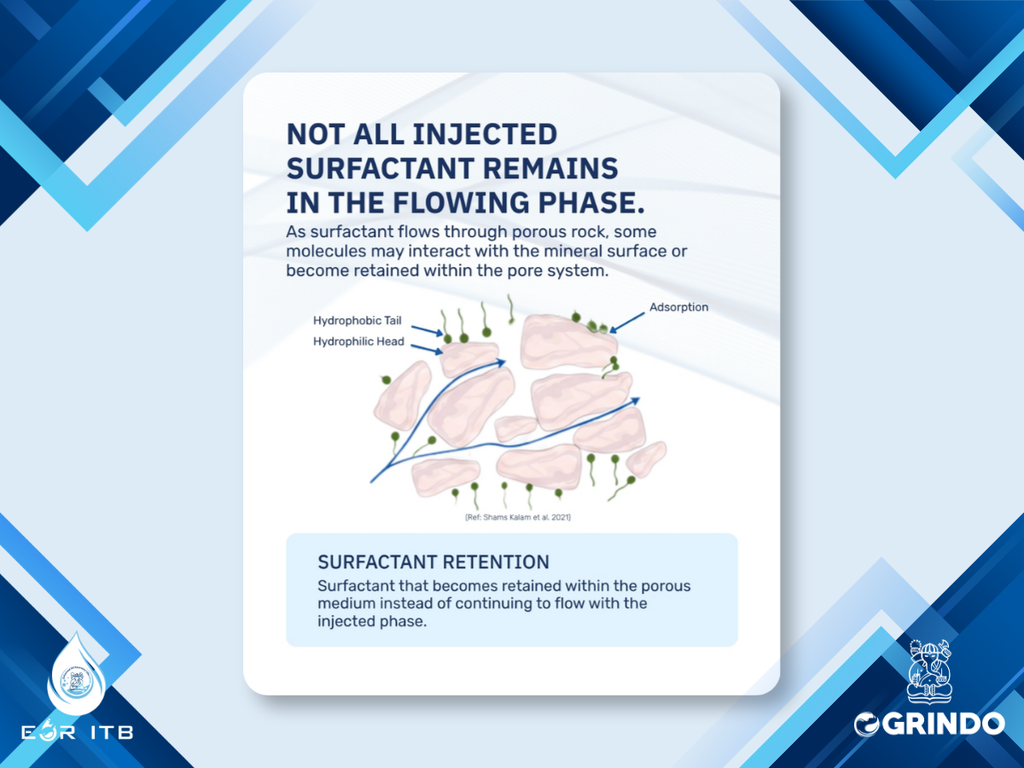
When surfactants flow through the rock, their molecules can interact with the rock surface and the fluids within the pores. These interactions can cause some surfactants to be retained within the porous media.
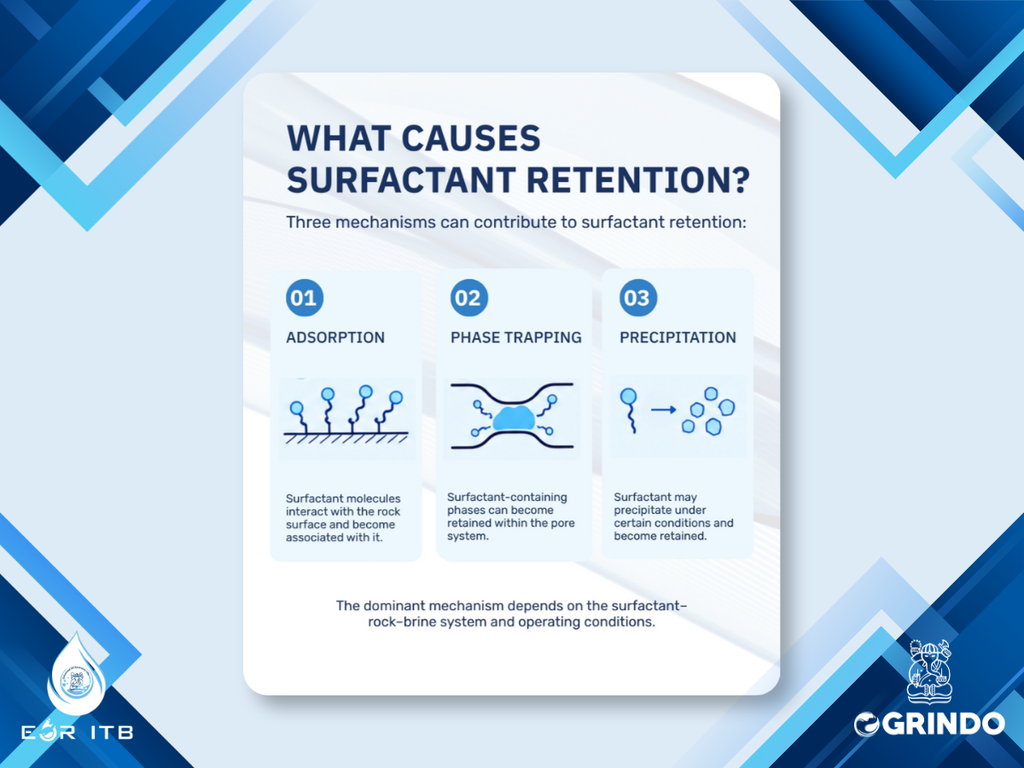
Several mechanisms of surfactant retention includes:
- Adsorption, which is the interaction of surfactant molecules with the rock surface, causing the surfactants to be adsorbed onto the surface.
- Phase trapping, which is the retention of surfactants due to the distribution and interactions between phases within the pores.
- Precipitation, which is the formation of precipitates or solid phases under certain conditions, causing some surfactants to no longer remain in the flowing fluid phase.
These mechanisms can affect surfactant transport within the porous media.
Why Does Surfactant Retention Important?
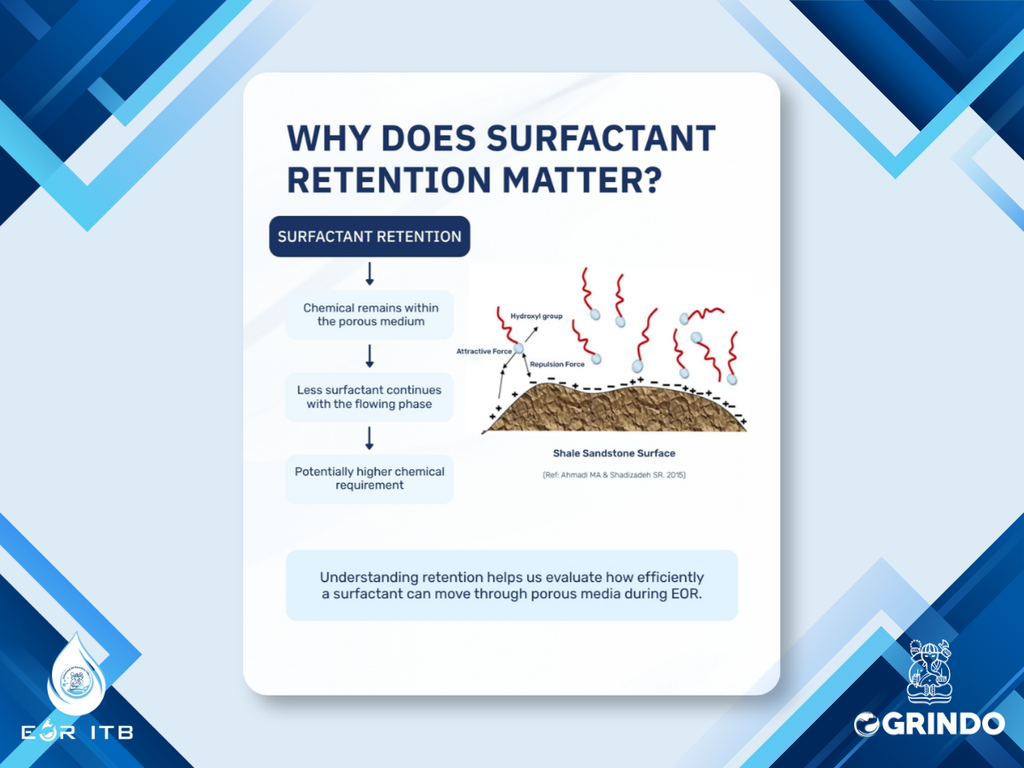
Retained surfactants no longer move with the flowing phase. Retention higher can reduce the amount of surfactant that continues to move through the porous media and potentially increase the requirement chemical to reach the target area.
Therefore, retention is one of the important aspects in evaluating chemical behavior and efficiency in chemical state in the Chemical EOR. However, retention is not the only parameter for assessing surfactant performance. The evaluation may also include IFT, phase behavior, stability, wettability, and the performance of coreflood.
How is Retention Evaluated in the Laboratory?
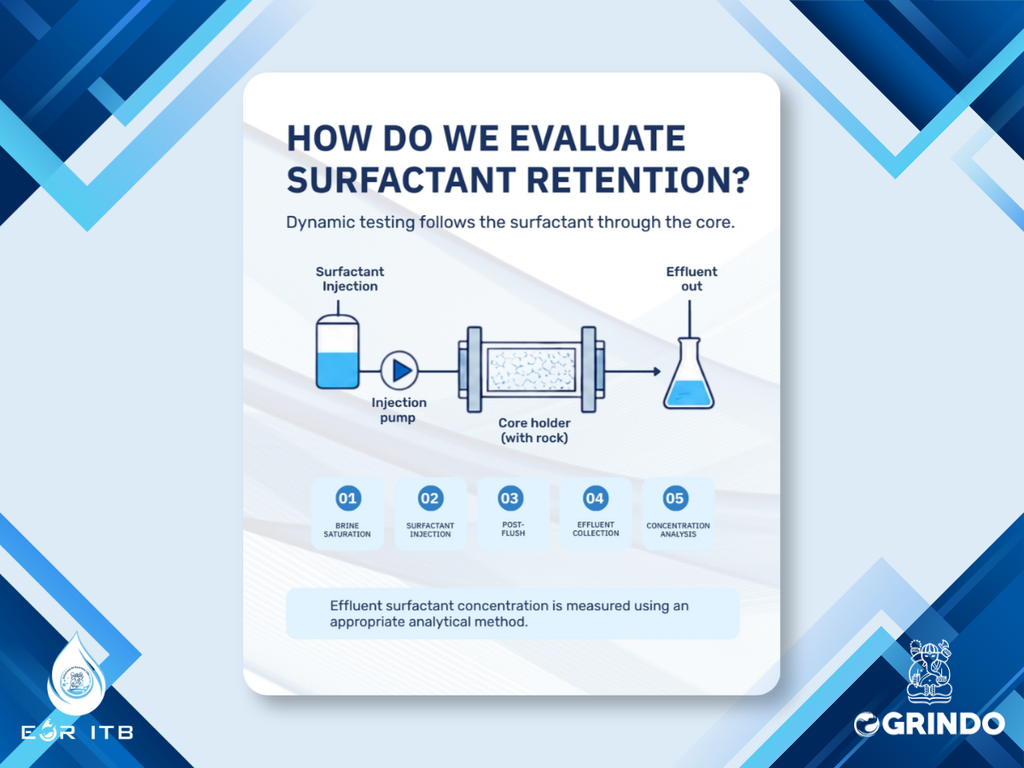
Retention can be studied through both static and dynamic tests. In dynamic tests such as coreflood, surfactant is flowed through a core plug, and then effluent the effluent collected and analyzed.
In simple terms, the test can be conducted through the following stages:
Brine saturation → Surfactant injection through the core → Post-flush → Effluent collection → Concentration analysis
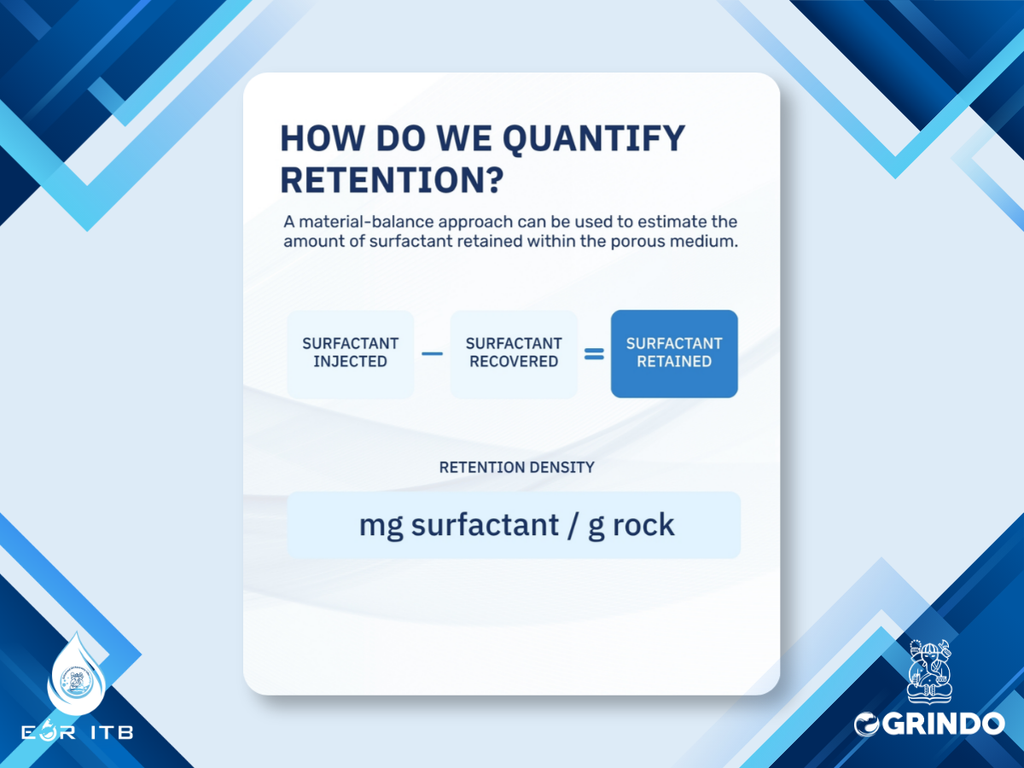
In simple terms, the amount of surfactant injected is compared with the amount of surfactant recovered from the effluent. Based on the material balanceapproach, the difference between the two can be used to estimate the amount of surfactant retained within the porous media:
Surfactant injected − Surfactant recovered = Surfactant retained
The result of retention can be expressed, for example, in mg of surfactant/g of rock.
Factors Affecting Retention
The extent of surfactant retention can vary in each system and is influenced by various factors, including:
- rock type and mineralogy
- surfactant type and concentration
- brine composition and salinity brine
- pH
- temperature
- the interactions of rock–surfactant–brine
Therefore, testing under conditions relevant to the reservoir system is an important part of evaluation Chemical EOR.
From Laboratory to EOR Application
The data of surfactant retention provide an overview of how surfactants are transported through porous media and can be used as one part of the screening and evaluation of Chemical EOR.
In its application, the data of retention do not stand alone. The test results need to be considered together with other parameters such as IFT, phase behavior, stability, wettability, and coreflood performance to provide a more comprehensive understanding of chemical behavior and performance.
Thus, the testing of retention—particularly under dynamic conditions—can help connect evaluation chemical in laboratory with the need of design and development Chemical EOR.
For Information and Collaboration
EOR Laboratory ITB
Email: eor@itb.ac.id
OGRINDO ITB
Email: info@ogrindoitb.com
Website: www.ogrindoitb.com